
Su kaynakları; ekonomik kalkınma, gıda güvenliği ve toplumsal refahın temel taşıdır. Yıllık ortalama 501 mm yağış alan ve Akdeniz iklim kuşağının kırılgan yapısında yer alan Türkiye, su yönetiminde kritik bir eşiktedir. Devlet Su İşleri (DSİ) verilerine dayanan bu analiz, iklim değişikliğinin mekânsal etkilerini ve değişen tüketim alışkanlıklarını gözler önüne sermektedir.
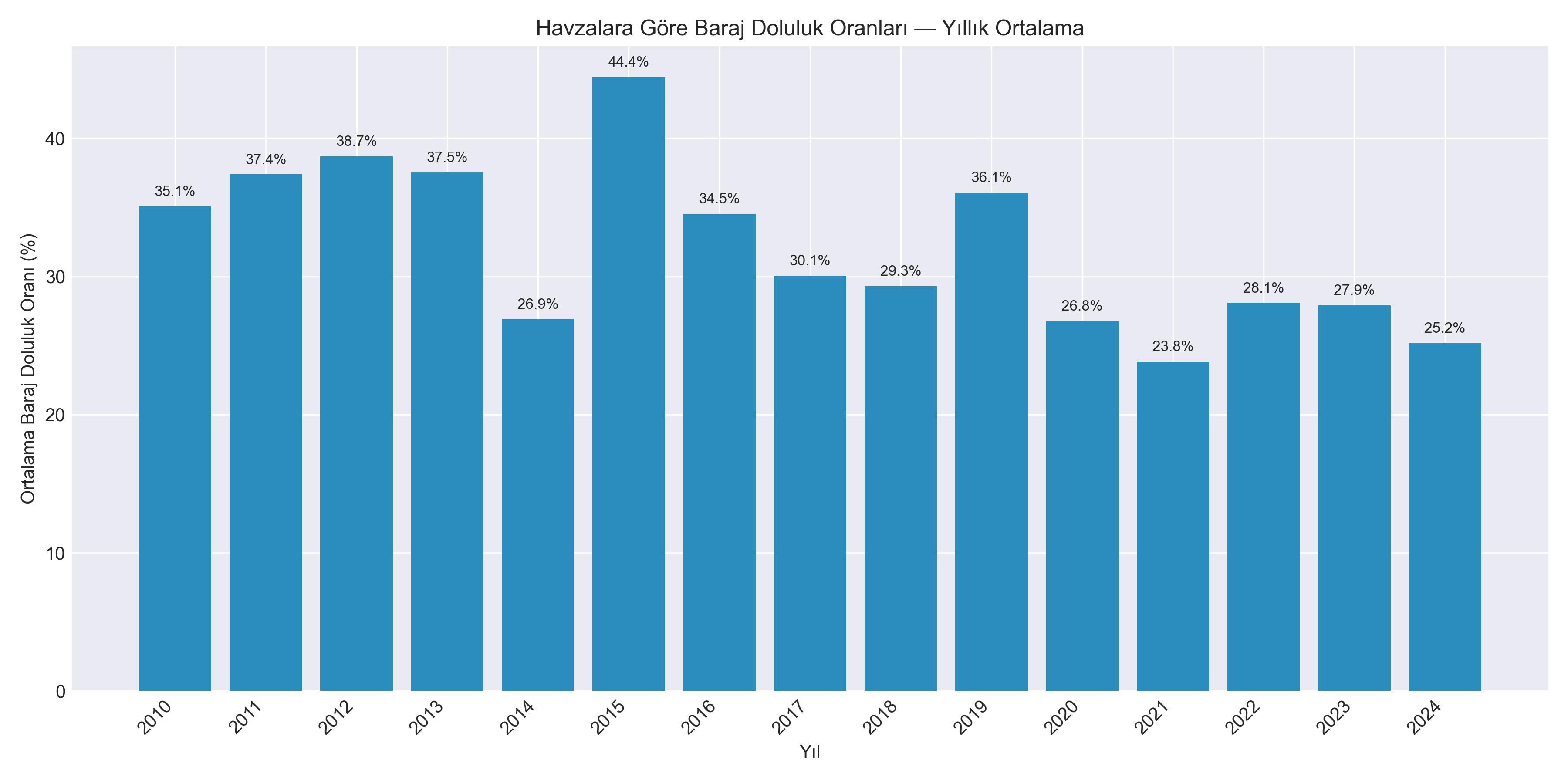
2010-2024 yılları arasındaki baraj doluluk oranlarında yüksek bir dalgalanma ve son beş yılda belirgin bir düşüş trendinin yerleştiği görülmektedir. 2015 yılında %44,4 ile zirveye ulaşan doluluk oranları, takip eden yıllarda istikrarsız bir seyir izlemiş ve 2021 yılında %23,8 ile en düşük seviyesine gerilemiştir. Özellikle 2020 yılından itibaren oranların tutarlı bir şekilde %30 bandının altında kalması ve 2024 yılında %25,2 seviyesinde gerçekleşmesi, meteorolojik kuraklığın ve artan su talebinin havzalar üzerinde kalıcı bir baskı oluşturduğunu ve su stresinin kronikleşme eğiliminde olduğunu ortaya koymaktadır. 2024 yılı verileri, ulusal ortalamanın ötesine bakmanın önemini kanıtlamaktadır. Türkiye geneli baraj doluluk oranı 2023'te %27,92 iken, 2024'te 2,75 puanlık düşüşle %25,16'ya gerilemiştir. Ancak bu %9,9'luk ulusal gerileme, yereldeki dramatik tabloyu maskelemektedir. İklim değişikliği, yağış rejimlerini bölgesel olarak bozarak bazı havzalarda taşkın riskini, bazılarında ise kuraklığı derinleştirmektedir.
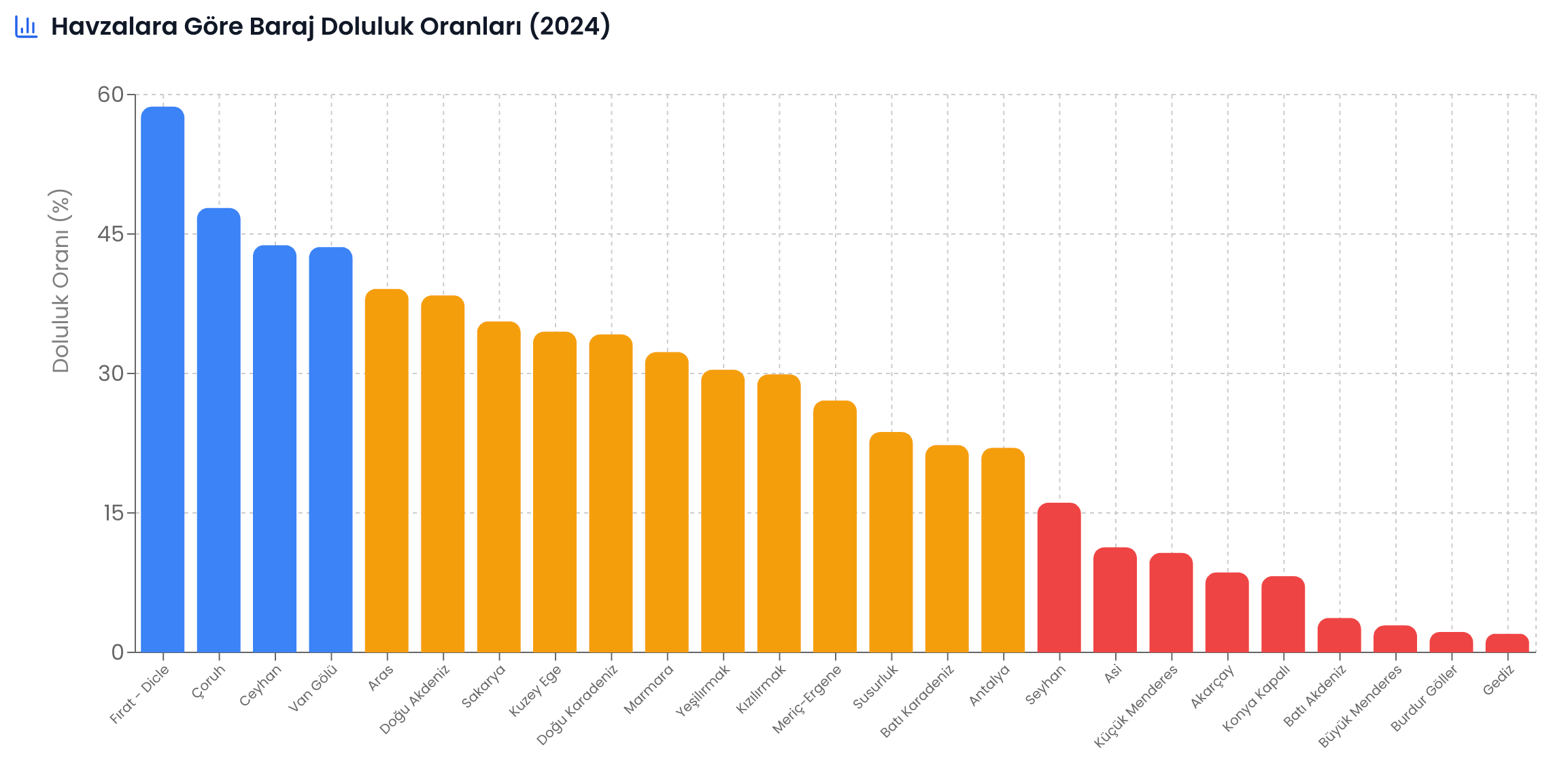
Yükselişe Geçen Havzalar: İyileşme mi, Anomali mi?
Van Gölü Havzası (Rekor Artış): En çarpıcı değişim burada yaşanmıştır. Doluluk oranı %11,3'ten %43,6'ya fırlayarak %285,8'lik bir artış göstermiştir. Bu durum, yoğun kar yağışı ve işletme değişikliklerinin bir sonucu olabilir ancak bölgenin hassas ekosistemi için yakından izlenmelidir.
Aras ve Fırat-Dicle: Doğu ve Güneydoğu Anadolu'da, özellikle Fırat-Dicle havzasındaki %23,3'lük artış (%58,7 doluluk), enerji ve sulama güvenliği açısından stratejik bir kazanımdır.
Marmara ve Kuzey Ege: İstanbul'u besleyen Marmara Havzası'nda doluluğun %32,3'e çıkması, metropolün su güvenliği için -kısa vadeli de olsa- bir nefes alma imkânı sunmaktadır.
Kırmızı Alarm Veren Havzalar
Akarçay Havzası (Kritik Eşik): Doluluk oranının %28,8'den %8,6'ya düşmesi (%70,1 erime), havzanın hidrolojik iflasa sürüklendiğini göstermektedir. Bu seviye, tarımsal üretim için doğrudan tehdittir.
Batı Karadeniz ve Seyhan: Batı Karadeniz'de %58,3'lük, Türkiye'nin tarım deposu Seyhan Havzası'nda ise %58,9'luk düşüşler kaydedilmiştir. Özellikle Seyhan'daki %16,1'lik doluluk oranı, gıda enflasyonu riskini tetikleyebilecek niteliktedir.
Türkiye'nin toplam su çekimi 2010'de 49,95 milyar m³ iken, 2024'te 68,52 milyar m³'e ulaşmıştır. Özellikle son iki yıldaki (2022-2024) 5,5 milyar m³'lük artış, baskının şiddetlendiğini göstermektedir.
2024 yılında Türkiye’de belediyeler, imalat sanayi, termik santraller, OSB müdürlükleri, maden işletmeleri ve köyler tarafından toplam 20,3 milyar metreküp su çekilmiştir. Bu toplam suyun %54,6’sı (11,08 milyar m³) denizden, %45,4’ü (9,22 milyar m³) tatlı su kaynaklarından temin edilmiştir. Denizden çekilen suyun %93,8’i soğutma amaçlı kullanılmış olup, bu oran termik santrallerin soğutma sistemlerinin ne kadar yoğun su ihtiyacına sahip olduğunu göstermektedir.
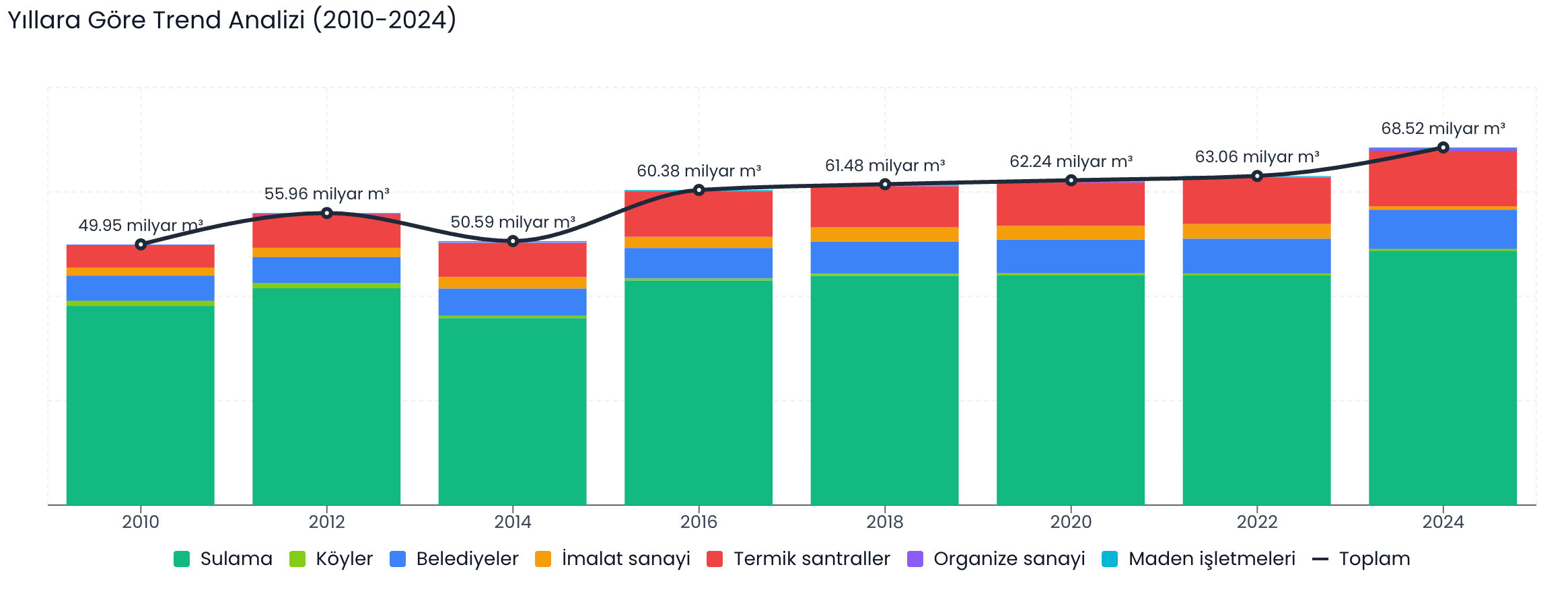
Tarımsal Sulama (%71 Pay): Aslan payı halen tarımdadır. 2024'te 48,70 milyar m³'e ulaşan tüketim, vahşi sulama yöntemlerinin ve genişleyen tarım alanlarının bir faturasıdır. Yapısal dönüşüm (damla/yağmurlama) verilerde henüz hissedilmemektedir.
Termik Santraller (Enerjinin Su Ayak İzi): Soğutma suyu ihtiyacı nedeniyle tüketim 12 yılda ikiye katlanarak 10,56 milyar m³'e çıkmıştır. Bu, enerji planlamasında su kısıtının gözetilmesi gerektiğini vurgulamaktadır.
Belediyeler ve Kentleşme: %54,7'lik artışla 7,47 milyar m³'e ulaşan kentsel tüketim, nüfusun %90'ının kentlerde toplandığı bir demografinin doğal sonucudur. Ancak kayıp-kaçak oranları bu tabloyu daha da ağırlaştırmaktadır.
Sanayide Dönüşüm (İmalat vs. OSB): İmalat sanayi tüketiminin düşerken (%72 azalış), Organize Sanayi Bölgeleri (OSB) tüketiminin rekor kırması (%258 artış), sanayi tesislerinin OSB çatıları altında toplandığını ve verilerin buraya kaydığını doğrulamaktadır.
Veriler, Türkiye'nin su yönetiminde "tek tip" çözümlerin ötesine geçmesi gerektiğini göstermektedir. Van Gölü'nde taşkın yönetimi konuşulurken, Akarçay ve Seyhan'da acil kuraklık eylem planları devreye alınmalıdır. Tarımda modern sulama tekniklerine geçiş bir tercih değil, gıda güvenliği için zorunluluktur. Termik santrallerin su tüketimindeki agresif artış ise, enerji politikalarının su kaynakları üzerindeki baskısını hafifletecek şekilde revize edilmesini gerektirmektedir.